Morphine Ghost
What is a Morphine Ghost?
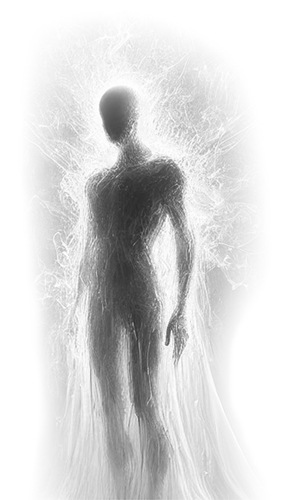
A morphine ghost is a literary metaphor for a person who exists in the uncertain space between presence and absence. The phrase evokes someone whose body remains in the world while their spirit, memories, or sense of self seem to drift beyond it. Historically, the image appears in twentieth-century literature describing the devastating effects of opiate addiction, where a "ghost" suggested someone made hollow by dependency—alive, yet diminished, moving through life like a shadow of the person they once were.
Over time, the metaphor has grown beyond addiction. A morphine ghost can represent anyone suspended between waking and dreaming, reality and hallucination, memory and forgetting. It is the patient staring through a rain-covered hospital window, the lonely figure wandering empty streets at dawn, the voice that cannot decide whether it belongs to the living or the dead. It is less about morphine itself than about the strange emotional landscape that morphine can symbolize: numbness, detachment, comfort, loss, and the quiet erosion of identity.
In literature, a morphine ghost is not necessarily someone who has died. Rather, it is someone who has become ghostlike while still alive—a reminder that people can disappear long before they are gone.
Usage in Literature
One of the earliest known literary uses of the phrase "morphine ghost" appears in Lan Ling's 1940 poem New Year in a Small Alley (小巷的除夕), written during the Japanese occupation of Manchuria. The poem follows a starving widow who wanders through the snow on New Year's Eve, desperately hoping to earn enough money to feed her infant. Instead of finding salvation, she encounters only a "morphine ghost"—a man so consumed by addiction that he is incapable of offering help or even functioning as a customer. The meeting is tragic not simply because of poverty, but because both characters have already been devastated by forces beyond their control.
In Lan Ling's work, the phrase morphine ghost is far more than an insult for an addict. It is a powerful metaphor. The man is physically alive, yet spiritually absent, his humanity hollowed out by morphine. Contemporary scholars note that Chinese writers of the period often referred to opiate addicts as "ghosts," emphasizing their gaunt appearance, emotional emptiness, and existence in a state that seemed halfway between life and death. By calling the man a morphine ghost, Lan Ling creates an image that is both haunting and compassionate—a person whose body remains, but whose vitality has already begun to disappear. More than eighty years later, the phrase still resonates because it captures a universal fear: not merely dying, but fading away while still alive.
Elizabeth Barrett Browning
Elizabeth Barrett Browning (1806–1861) was one of the most celebrated English poets of the Victorian era. Best known for Sonnets from the Portuguese and the novel-length poem Aurora Leigh, she wrote on themes of love, social justice, politics, and human suffering. Throughout much of her adult life she struggled with chronic illness and relied on opiates, particularly morphine, to manage pain. Because of this, her life has become an important subject in discussions of the history of medicine, addiction, and the relationship between illness and creativity.
"Morphine's Ghost"
In the section titled "Morphine's Ghost" from The Lady on the Sofa: Revisiting Elizabeth Barrett Browning's Illness, Ana Parejo Vadillo argues that morphine has become an overlooked yet persistent presence in both Elizabeth Barrett Browning's life story and modern interpretations of her health. Rather than portraying Browning simply as a frail invalid, Vadillo examines how morphine shaped her physical condition, her emotional well-being, and perhaps even the circumstances surrounding her death.
Vadillo notes that Browning herself described morphine as easing her headaches, calming her mind, restoring her appetite, and providing relief from chronic pain. At the same time, the article presents evidence that prolonged use may have produced dependence, with family and physicians becoming increasingly concerned about the amount she required. The section suggests that some symptoms traditionally attributed to an unidentified illness may instead reflect the long-term effects of morphine use, and it raises the possibility that morphine intoxication contributed to her final decline.
The title "Morphine's Ghost" is metaphorical rather than literal. Vadillo does not describe Elizabeth Barrett Browning herself as a "morphine ghost." Instead, morphine is portrayed as the lingering, often invisible presence that haunted both her life and her legacy. The "ghost" is the drug's enduring influence—an influence that Victorian biographers tended to minimize while emphasizing the image of the fragile, suffering poet. Vadillo argues that understanding Browning's reliance on morphine provides a fuller and more historically accurate picture of both her remarkable literary achievements and the challenges she faced throughout her life.
Sean Hurley's Morphine Ghost
In the audio series, Atoms, Motion & the Void, Sean Hurley reimagines the historical idea of the morphine ghost as something profoundly spiritual rather than pathological. Following Sherwin Sleeves' participation in the mysterious Bodhi Seti Satva—a transformative experience in which he witnesses, shares, and ultimately helps ease the death of his friend, Artur Barrel-Bain, Sherwin awakens in an altered state of consciousness. Artur's twin sister, Tristam Barrel-Bain, left a note of warning for him about what he is, or is about to, experience. Her note describes this condition as becoming "like a morphine ghost," immediately distancing the phrase from its historical association with addiction. Instead of a person emptied by narcotics, Hurley's morphine ghost is someone emptied of the ordinary machinery of the self.
The note emphasizes that Sherwin's mind has not been damaged, but unburdened. His thoughts no longer propel his experience in the familiar way. Hurley illustrates this through a striking metaphor: the engine of a car has been disconnected from its wheels. The engine continues to run, but the vehicle moves by another force altogether—"The universe moves it." This image reframes consciousness itself. The morphine ghost is not unconscious, nor asleep, nor even detached from reality. Rather, the ordinary ego has ceased directing experience, allowing Sherwin to drift effortlessly with events instead of attempting to control them.
The adjective "morphine" evokes something other than a drug. It suggests anesthesia, relief from pain, emotional quiet, and the peaceful suspension of urgency. Hurley repeatedly compares the experience to being etherized or anesthetized while insisting that the mind is actually functioning in a different way. The result is a paradoxical existence marked by "blissful abidance" alongside a ghostlike transparency—a state in which Sherwin is simultaneously present and absent, engaged with the world yet no longer anchored to his own identity. The "ghost" is therefore not someone fading because of addiction, but someone whose sense of self has become remarkably permeable.
This total loss of boundaries reaches its fullest expression in the closing paragraphs of the note. "You may find yourself in a deeply empathetic state, untethered and drifting." Tristam warns that Sherwin may begin inhabiting the perspectives of other people, animals, or even inanimate objects: the floor beneath his feet, a passing stranger, a bird in flight, or a cloud over the city. Shortly afterward in the story, Sherwin indeed slips into the awareness of his elderly neighbor, Edna, and a black bird, experiencing their thoughts as though they were his own; seeing through their eyes, being present in their bodies, and feeling Edna's sadness over her son who no longer visits.
Whether these experiences are supernatural or psychological is left deliberately unresolved in Tristam's letter. Tristam herself refuses to insist that they "be considered real." The morphine ghost becomes someone whose consciousness is no longer confined to a single individual but drifts freely among other lives.
The phrase therefore undergoes a remarkable transformation. In Lan Ling's 1940 poem New Year in a Small Alley, a morphine ghost is a tragic figure whose addiction has hollowed him into a shadow of himself. Hurley inverts that image. His morphine ghost is also ghostlike, but not because life has been consumed by narcotics. Instead, the boundaries of the self have dissolved through profound spiritual experience. The ego becomes transparent, pain is quieted, purpose gives way to simple existence, and consciousness expands beyond the individual. In Hurley's hands, the morphine ghost is no longer the victim of chemical oblivion, but a traveler who has become untethered from ordinary identity, drifting peacefully through the minds and experiences of the world itself.